-
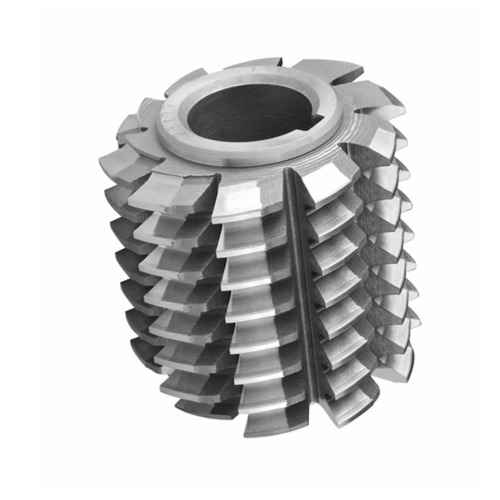
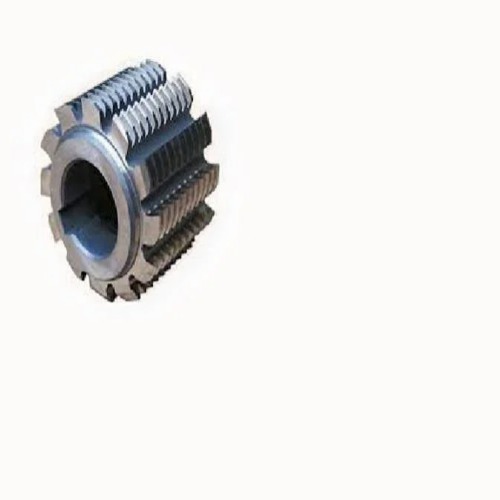
Helical Profile: The hob has multiple cutting teeth arranged helically around its circumference. As the hob and the gear blank rotate in a synchronized motion, the hob's teeth gradually "cut" the profile of the gear teeth into the blank.
-
Material: Hobbing cutters are made from high-speed steel (HSS) or, for more demanding applications, from tungsten carbide. These materials provide the necessary hardness and toughness to cut through various metals.
-
Precision and Accuracy: The profile of a hobbing cutter's teeth is designed to be highly precise to ensure that the generated gear teeth are accurate and conform to specific standards, such as those from ISO or AGMA.
-
Types: Hobbing cutters come in various types depending on the application:
-
Topping Hobs: Cut the teeth and the outside diameter of the gear simultaneously.
-
Semi-Topping Hobs: Cut the teeth and a portion of the outside diameter.
-
Pre-grinding Hobs: Cut the rough profile of the gear teeth, which is then finished by grinding.
-
Benefits: Hobbing offers several advantages, including high production rates, consistent quality, and the ability to produce a wide range of gear types with a single machine.

 Mon -Sat 9.00 AM to 6.00 PM
 Send Email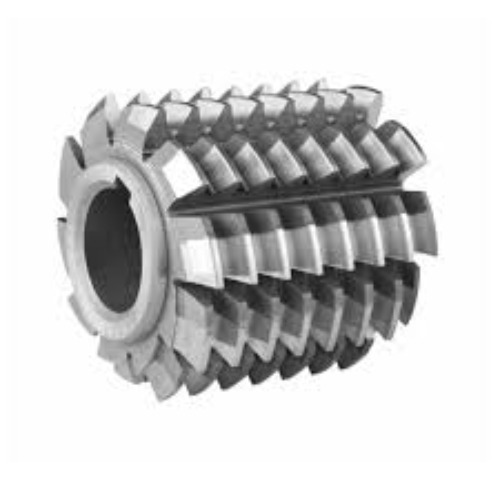




 Send Inquiry

